
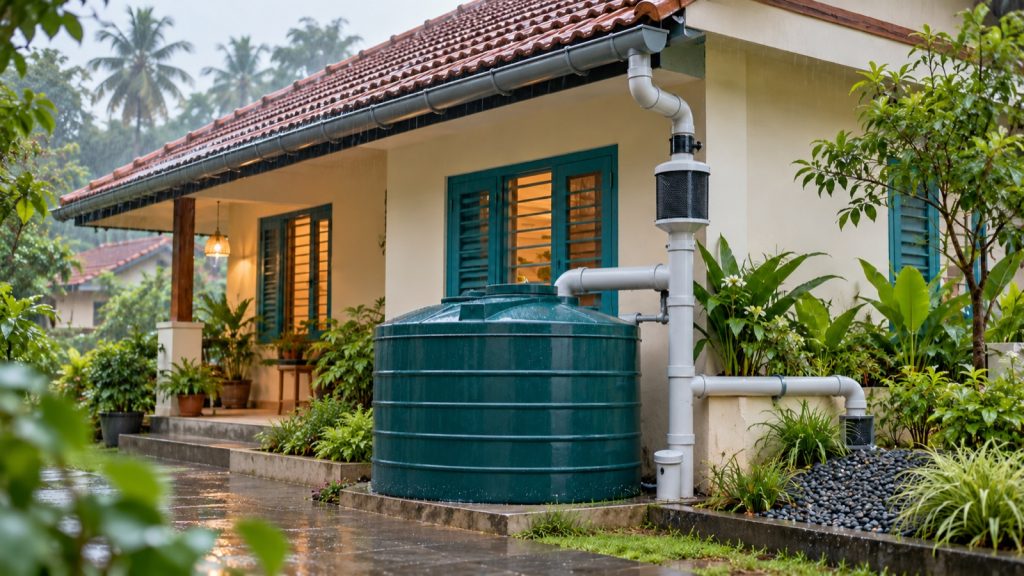
Rainwater harvesting can involve collecting roof runoff for suitable uses or directing it into an appropriately designed recharge arrangement. The right approach depends on the site.
What is the intended use?
Decide what you want the system to achieve before selecting equipment. Storage for gardening and groundwater recharge involve different design considerations.
How will the water be collected?
Ask a qualified professional to assess roof materials, gutters, downpipes, filtration, and first-flush diversion. CGWB guidance includes attention to suitable roof materials and diverting initial runoff. Central Ground Water Board: Rainwater Harvesting Guidance (PDF).
Who will maintain it?
Plan for cleaning collection surfaces, inspecting connections, and maintaining filters and storage. Assign these tasks before installation.
Is recharge suitable for the site?
Recharge arrangements need appropriate technical assessment. Poor design can create contamination risks; CGWB emphasises following technical guidance. Central Ground Water Board: Groundwater and Recharge FAQs.
Collected rainwater should not automatically be treated as drinking water. Its suitability depends on quality, treatment, testing, and intended use.
Your next step: Prepare a site-specific question list for a qualified rainwater-harvesting professional.